Recap of the International Inclusive Education Symposium 2026 in Navrongo, Ghana
The International Inclusive Education Symposium held in Navrongo, Ghana, on 15th May 2026 brought together educators, advocates, and experts dedicated to advancing inclusive education. This event offered a platform to share knowledge, strategies, and experiences aimed at making education accessible and supportive for all learners. The symposium featured a rich program of presentations, workshops, and discussions that highlighted the current state and future directions of inclusive education.
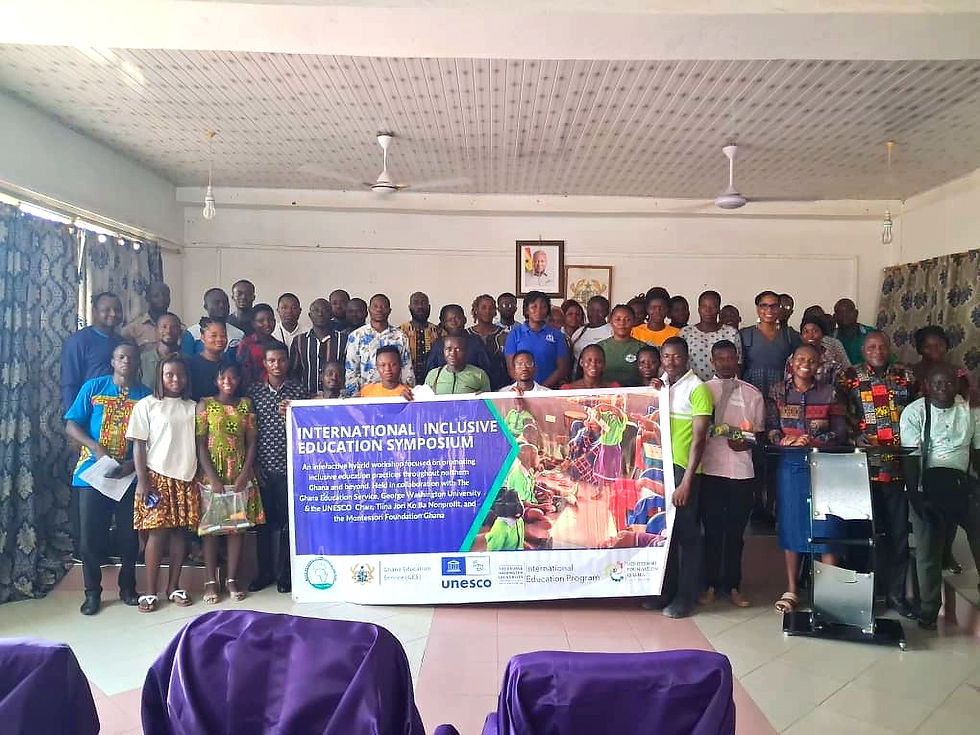
Opening and Welcome
The symposium began with a warm welcome from Mr. Robert Sampana, Director of Management & Advocacy at Tiina Jori Ko Ba. His address set the tone by emphasizing the importance of advocacy and management in driving inclusive education forward. Following this, Mrs. Jeanette Walton, co-founder of Tiina Jori Ko Ba Nonprofit NGO, led the opening activity and introductions, fostering a collaborative atmosphere among participants.
Moving Towards Greater Inclusion
Dr. Adam Awine from the University of Education, Winneba, delivered a compelling talk on advancing inclusion in education. He shared practical approaches to having inclusive classrooms. Dr. Awine emphasized teacher training, curriculum adaptation, and community involvement as key factors in achieving meaningful inclusion.
Understanding the Inclusive Education Landscape
Dr. Doran Gresham from George Washington University presented a welcome video that provided an overview of how to create an inclusive classroom atmosphere through Validating, Affirming, Building and Bridging students (VABB). He shared important frameworks and theoretical underpinnings to consider. His insights helped frame the discussions by highlighting challenges and opportunities in creating inclusive learning environments.
Balancing Work as an Inclusive Educator
Madam Rovaughna Richardson, a Licensed Professional Counselor from Esteem Resources Africa, addressed the challenges educators face in balancing their professional responsibilities with the demands of inclusive teaching. She offered strategies for managing stress, maintaining motivation, and fostering resilience. Her session was particularly valuable for educators seeking sustainable ways to support all students effectively.
The Importance of Inclusive Education
Valerius Sandow from St. John Bosco’s College of Education highlighted the critical role inclusive education plays in social development. He argued that inclusive schools promote equality, reduce discrimination, and prepare students for diverse societies. His presentation included examples of successful inclusive practices that have transformed communities by empowering learners with disabilities. He also answered questions regarding inclusive education from participants.

Workshops: Practical Skills for Inclusion
The symposium featured two key workshops designed to equip participants with hands-on skills:
Balancing Life as an Inclusive Educator led by Madam Rovaughna Richardson
This workshop focused on personal well-being and professional growth. Participants learned techniques for self-care, and building supportive networks.
Using Basic Ghanaian Sign Language (GSL) - Concept 2 led by Mr. Robert Sampana
This session introduced attendees to fundamental GSL skills, enabling better communication with deaf or hard-of-hearing students. The practical exercises helped demystify sign language and encouraged its integration into classrooms.
Key Takeaways from the Symposium
The closing remarks summarized the event’s main messages:
Inclusive education requires commitment from all stakeholders, including educators, families, and policymakers.
Teacher training must include practical skills for managing diverse classrooms.
Mental health and well-being of educators are essential for sustaining inclusive practices.
Communication tools like sign language enhance accessibility and participation.
Community engagement strengthens support systems for inclusive education.
Participants left with renewed motivation and concrete ideas to implement in their schools and organizations.

Comments